








Retiring to Cyprus
The idea often starts out small, but what an adventure it becomes! Sometimes, it just comes at the right time, like when the sun is still warm in the evening and dinner outside feels easy and natural. And sometimes, it comes with the next tax bill at home! Or it comes as a wonderful surprise, when your working life is slowing down, and you start to think about what exciting things come next.
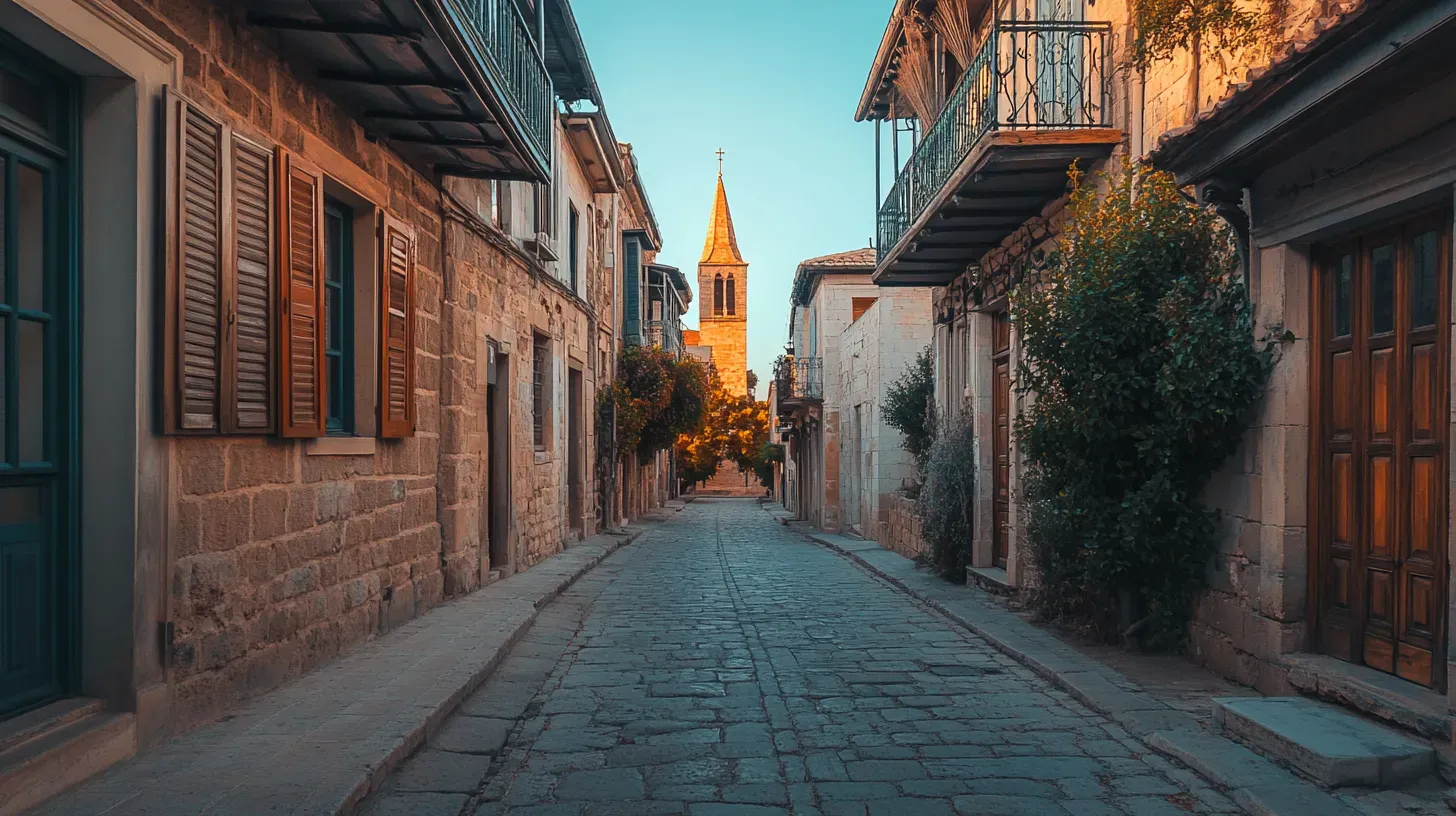
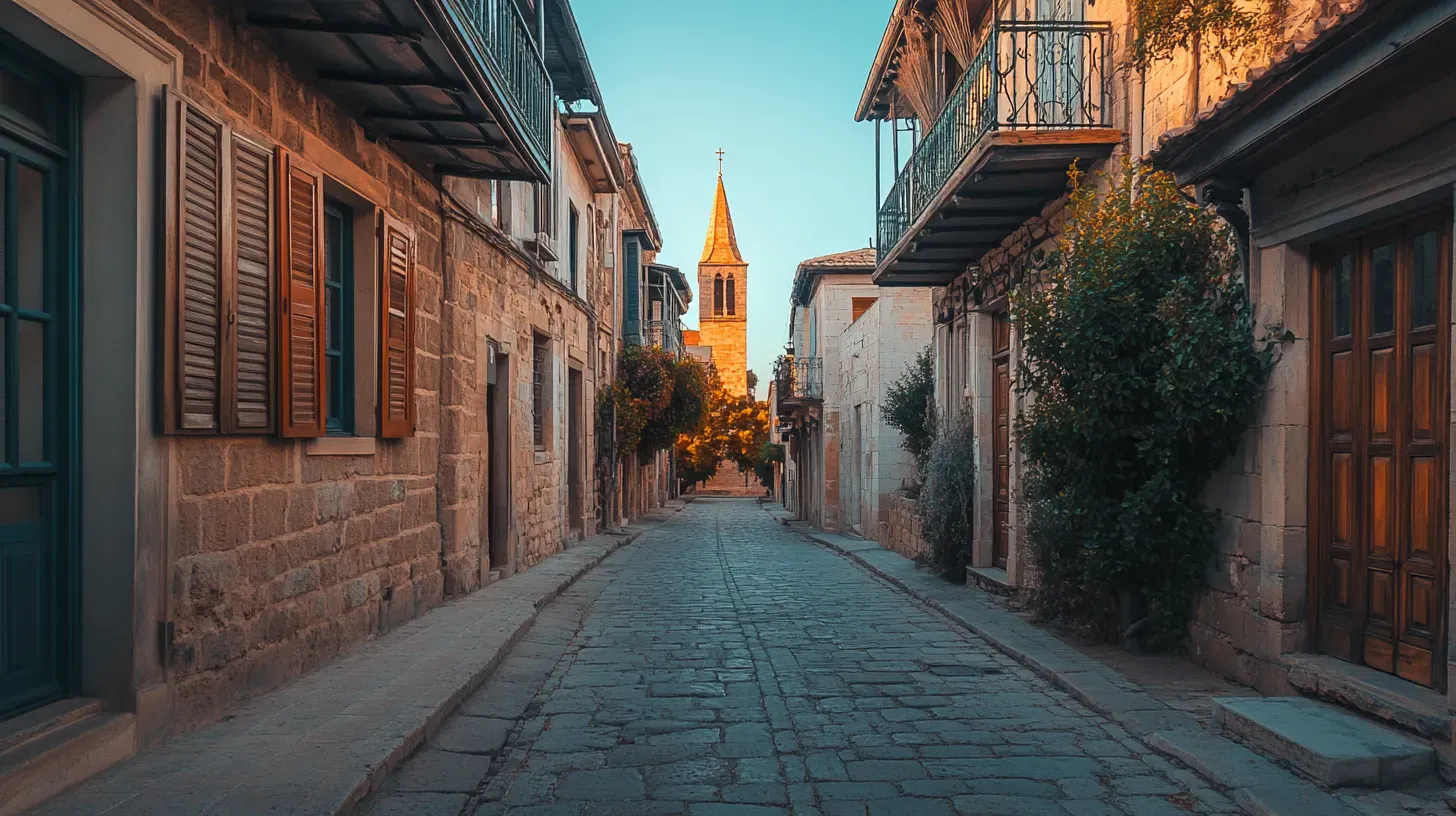
Many of our clients describe this in the same way. It does not feel like leaving. It feels like a sense that things could be done better. People who retire to Cyprus often find much of what they were looking for, even when they were not sure at the start what that would be.
Our international team has guided people through this step for more than two decades. We work closely with each client. We know the score - behind every question sits a personal decision.
This handy guide will give you all the info you need about the tax options when retiring to Cyprus, how to get residency, healthcare and daily life on the island, so you can make an informed decision.
Table of Contents
- Why retirees move to Cyprus
- Healthcare in Cyprus: what retirees need to know first
- Cyprus pension tax: what applies in 2026
- Relocating to Cyprus, step by step
- Healthcare for retirees moving to Cyprus
- Life and retirement after moving to Cyprus
- PMG, your partner when retiring to Cyprus
- Frequently asked questions
- Retiring in Cyprus: talk to us

Why Retirees Move to Cyprus
Many people notice the difference during their first winter in the sun, while it rains or snows back home. For international retirees, the appeal usually comes down to a simple mix: climate, safety, healthcare, cost of living, and a tax system that not only allows a move to Cyprus but, depending on where you come from, can reward it.
Beach, Sea and Daily Life in Cyprus
For many people who think about moving abroad, being close to the beach and the sea is a key part of the decision. Cyprus has more than 60 sandy beaches, among them some of the finest in the Mediterranean.
In daily life this can mean a morning walk along the water, lunch outdoors in January, and long, relaxed days. Looking back, many retirees feel that the move to life in Cyprus was the right choice.
Climate and Well-Being on Cyprus
With around 340 days of sunshine a year, Cyprus is generally seen as the sunniest country in the European Union. Winters are mild. Temperatures of 15 to 20°C are the norm, not the exception. The benefits show up in how you move, sleep and feel. This is one of the things retirees mention most often after moving to Cyprus, even though it played little part in their first plans.
Safety and Daily Life in Cyprus
Cyprus is generally regarded as one of the safer countries in Europe. Daily life is calm and orderly, and the crime rate is low. English is widely spoken — at the doctor's, in government offices and at the supermarket — so everyday tasks rarely pose a language barrier. International communities are growing, particularly in Limassol, Paphos and Larnaca, which makes meeting people and settling in after a move easier than in many other countries.
Cost of Living When Retiring to Cyprus
Compared with most Western and Northern European countries, the cost of living in Cyprus is generally lower, especially for groceries, restaurants and local services. For many retirees, a move to Cyprus means the same pension with far more room to breathe.
Retiring in Cyprus at a Glance
| Criterion | Typical High-Tax European Country | Cyprus |
| Sunshine hours per year | approx. 1,700 to 1,800 | approx. 3,300 |
| Income tax on pensions | up to 40 to 50% | see below |
| Inheritance tax | up to 30 to 40% | 0% |
| Wealth tax | varies by country | none |
| Capital gains and dividend tax | 25 to 30% or more | 0% (Non-Dom Status) |
| Cost of living | high to very high | moderate |
| Safety (EU comparison) | medium to high | very high |


Healthcare in Cyprus: What Retirees Need to Know First
For many people who think about moving abroad, healthcare is the biggest worry. That is understandable, and it deserves a clear answer before we turn to taxes.
Since 2020, Cyprus has run the General Healthcare System (GHS, also called GESY), a modern system that meets EU standards. In Larnaca, Limassol and Paphos there are international medical practices and English-speaking doctors. Medicines that are commonly prescribed across the EU are generally available in Cyprus, because the country follows the same approval rules.
When you join the GHS, no health questions are asked and no pre-existing conditions are excluded. Emergency care meets European standards.
You will find the full section on the GHS, contributions, private top-up insurance and how to handle your current health insurance further down in this guide.

Cyprus Pension Tax: What Applies in 2026
Information on Cyprus pension tax online is often incomplete or out of date. What follows reflects the position after the 2026 tax reform, the way our team explains it to every client thinking about a move to Cyprus.
Two Models for Taxing Your Foreign Pension
Whether your pension is taxed in Cyprus depends first on the Double Taxation Agreement (DTA) between your country of origin and the Republic of Cyprus.
For all pension types where Cyprus has the right to tax, you can choose between two models. Which one suits you best depends on your income, and we work through that calculation with you.
Model 1: The 5 Percent Flat Rate on Cyprus Pensions
The first €5,000 of your yearly pension is fully tax-free in Cyprus. Anything above that is taxed at a single flat rate of 5 percent, no matter how high your pension is.
Here is what that means in practice. A retiree with a state or private pension of €36,000 a year would usually pay several thousand euros in income tax in most high-tax European countries. In Cyprus, the tax is a flat €1,550 a year. The same generally applies to private pension annuities and many occupational pensions.
Model 2: The Standard Income Tax Tariff
You can also choose to have your pension taxed at the standard Cypriot income tax rates. For smaller pensions, this is often the better choice.
| Annual Income | Tax Rate 2026 |
| Up to €22,000 | 0% |
| €22,001 to €32,000 | 20% |
| €32,001 to €42,000 | 25% |
| €42,001 to €72,000 | 30% |
| Above €72,001 | 35% |
The tax-free personal allowance rose from €19,500 to €22,000 with the 2026 reform. You can choose again each year which model to use, a flexibility few other EU countries offer in this form.
How we support you: we review your full income and show you clearly which option is better for you over the long term, with concrete figures.

The Non-Dom Status for Retirees in Cyprus
Some retirees also hold capital assets, share portfolios or private pension policies on top of their pension. For them, the Non-Domicile Status (Cyprus Non-Dom Status) is often the more important of the two tax advantages.
As a Non-Dom you generally pay no tax in Cyprus on:
- Dividends from local and foreign holdings or active businesses
- Interest from current, fixed-term and savings accounts
- Returns from shares, ETFs and investment funds
- Payments from private pension policies (depending on the structure)
- Rental income. The Special Defence Contribution (SDC) was abolished entirely with the 2026 reform.
The status applies for 17 years from the year you move. Someone moving to Cyprus at 63 is fully exempt from these taxes until the age of 80. After the 17 years end, you can generally extend it for two further five-year periods against a yearly flat fee.
For comparison, in most high-tax European countries dividends face a dividend withholding tax of 25 to 30 percent or more. Over ten or fifteen years, that difference can add up to far more than the cost of moving.
How we support you: PMG will apply for Non-Dom Status on your behalf, ensure that all the requirements are documented correctly, and handle the yearly maintenance of the status reliably.
Double Taxation and DTAs: Where Will You Pay Your Taxes?
One of the most common questions when moving to Cyprus is whether you will now pay tax in two countries. The answer depends on the Double Taxation Agreement (DTA) between your country of origin and Cyprus, and on the type of pension you receive.
One point upfront: your pension is still paid out by the same provider in your home country. You simply give them your new bank details in Cyprus and your Cypriot address. Some pension providers may not pay into a foreign account. If you get your pension in GBP it might be better to have it paid into your GBP account e.g. use a Wise or Revolut account to save on foreign exchange fees.
| Type of Pension | Typically Taxed In |
| State or social security pension | Often the country of origin (source state principle), though many DTAs assign taxation to Cyprus |
| Civil servant or public-sector pension | Country of origin (paying-state principle) |
| Private pension annuity | Cyprus (5% flat or standard tariff) |
| Occupational pension | Often Cyprus (5%); a lump-sum at retirement may be tax-free. Case-by-case review required |
Most DTAs that Cyprus has concluded follow the same basic principles. Where the DTA gives Cyprus the right to tax, you benefit directly from the 5 percent flat rate or the standard income tax tariff. Where tax stays in your country of origin, the main Cyprus advantage is the Non-Dom Status for capital income, dividends and interest, and the option to place private pension policies and private occupational pensions under the favourable 5 percent model.
If you move to Cyprus as a civil servant or public-sector retiree, that pension generally stays taxable in your country of origin. The 5 percent model does not apply to it. Even so, the move can still make sense for tax reasons, because capital income and dividends fall under the Cyprus Non-Dom Status.
A note for retirees with significant income at home: if you keep income that's still taxable there — such as rent from a property — the rules on limited tax liability and personal allowances vary by country. Many let you be treated as fully tax-liable when most of your income is taxed at home, which can protect your personal allowances. Whether that helps in your case is something we review individually as part of the double-tax treaty (DTA) analysis.


Relocating to Cyprus, Step by Step
As an EU citizen you have full freedom of movement, and you need no visa. Non-EU citizens have several well-established residency routes, which we go through one by one. For retirees, the relocation to Cyprus follows a clear, structured process, and we guide you through every step.
It all starts with secure accommodation, as a tenant or as an owner. This is the basis for all the other registrations.
How we support you: we recommend trusted local contacts and guide you through the legal review of rental and purchase contracts.
As an EU citizen living in Cyprus for more than three months, you register with the Civil Registry and Migration Department. You then receive the official registration certificate, known as the Yellow Slip.
You will need a valid passport or ID, proof of accommodation, proof of enough financial means, and proof of health insurance.
How we support you: PMG prepares all the documents, takes care of any translations you need, and guides you through the official process, step by step.
With the Yellow Slip in hand, you register with the Cypriot tax authority and receive your Tax Identification Number (TIN). Only then are you officially registered as a taxpayer in Cyprus, and only then can you access all the further tax advantages.
How we support you: We will apply for your TIN, handle your tax obligations effectively and establish your residency status properly from day one.
For retirees who move to Cyprus for good, the path to tax residency is simple: the 183-day rule. Anyone who spends more than 183 days in a calendar year in Cyprus is generally treated as tax-resident there, with no further conditions. This rule is unchanged after the 2026 tax reform.
In practice this means a home in Cyprus, a bank account in Cyprus, fully giving up your home in your country of origin, and proof that you spend most of the year on the island. Clear documentation is essential.
A note on the 60-day rule: there is also a 60-day rule for individuals running a business, working in Cyprus or holding a director role in a Cypriot company. This does not apply to retirees who only receive a pension. Some people use the 60-day rule through an active Cypriot limited company on purpose, for example to manage their own investments or a rental property in Cyprus. This gives them more freedom to travel throughout the year. The company must always have genuine economic substance. Whether this model is right for you is something we will discuss with you individually.
How we support you: PMG builds an individual strategy for you, including a checklist that holds up both before Cypriot authorities and before the tax authorities in your country of origin.
As long as you keep a home in your country of origin, you usually stay fully tax-liable there. Retirees most often underestimate this point when moving to Cyprus, and in hindsight it can prove the most expensive.
A clean tax break with your old country usually involves several steps: deregistering with the local registration office; telling the tax authority your departure date and filing your final tax return; giving your pension provider your new bank details (Wise & Revolut for GBP pensions) and Cyprus address; and sorting out your health insurance status. Where they apply, exit tax rules in your home country, for example on large company shareholdings, should ideally be reviewed before the move.
After your tax registration, we apply for the Non-Dom Status on your behalf. You also receive an international tax certificate. This is the document banks, custodians and foreign authorities need to officially recognise your residency in Cyprus.
How we support you: we apply for both, support you through the whole process, and make sure your Non-Dom Status is correctly maintained and documented in the following years.

Healthcare for Retirees Moving to Cyprus
Healthcare is not something you can just put to one side when you're thinking about retiring to Cyprus. For a lot of people, it is their main concern, and we take it seriously every time we meet with them for the first time.
The State Healthcare System GHS (GESY)
Since 2020, Cyprus has run the General Healthcare System (GeSY), a modern system for everyone that meets Western European standards. As a tax resident, you have access to family doctors, specialists, hospitals and a wide range of medicines at heavily subsidised prices.
When you join, no health questions are asked and no pre-existing conditions are excluded. Your contribution is 2.65% of your income. On a monthly pension of €2,000, that is about €53 a month.
Private Health Insurance
On top of this, we generally recommend private health insurance. Not because the GHS is poor, but because extra cover can give you shorter waiting times, free choice of doctor, and cover abroad. For a 65-year-old, good international health insurance usually costs around €1,200 to €1,500 a year.
Your Health Insurance When Moving to Cyprus
Upon relocating, your membership with the local state health insurance provider will typically come to an end. Special rules may apply for retirees with rights under specific national schemes, and these require an individual review. Depending on the terms of your contract and your personal circumstances, you may be able to retain your private insurance policy from your home country.
We provide comprehensive support by working with you to identify the most suitable insurance solution for your specific needs, ensuring that you are not charged multiple times or left without adequate coverage. Where necessary, we recommend trusted contacts from our network.

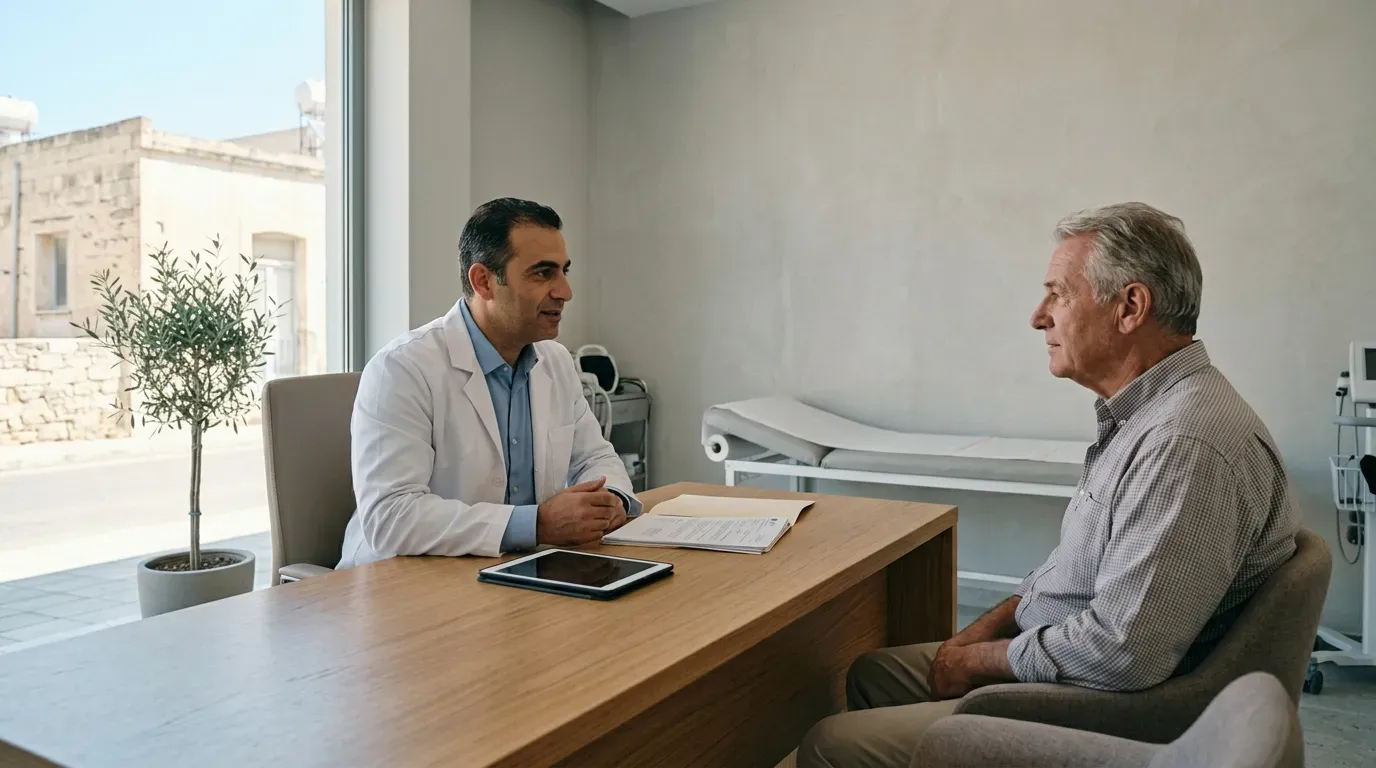
Life and Retirement After Moving to Cyprus
What retirees report most often after relocating to Cyprus is not what you might expect. It is something far simpler.
Daily life changes for the better. You start walking again. You have lunch outside in December and January, because everyday life now allows it. Over time, Life in Cyprus in retirement tends to change people in small but lasting ways.
Cyprus has it all: golf, tennis, hiking and cycling in a landscape you can enjoy all year round, along with fresh, varied and affordable Mediterranean food, and cultural events, concerts and festivals with no winter break. Your home country is closer than you might think, too. Most of Europe's major cities are pretty close by, just a few hours away by plane, so it's not too much of a hassle to pop over and visit the kids or grandkids.
The international communities in Cyprus are expanding rapidly, and with them comes a growing network of medical professionals, homecare services and everyday support, making settling in a breeze.
PMG - Your Partner When Retiring to Cyprus
There is more to the decision whether to retire to Cyprus. It is who is going to guide you and can you trust them.
For over twenty years we at PMG have been helping people taking this very move, with a team of tax consultants, lawyers, international legal professionals and relocation experts. Tax law guidance, legal matters, accounting & admin support, all available under one roof.
We are members of the Larnaca Chamber of Commerce and hold the required professional licences.
Our Services for Retirees in Cyprus
- Analysis and planning: a full review of your income, a DTA analysis for your home country, a calculation of your tax savings and a review of any exit tax rules before they become a problem.
- Registration and authorities: all documentation prepared and personal support for Yellow Slip, Tax Number, Non-Dom application and international tax certificate. You are never alone when dealing with local authorities
- If there is something like a “deregistration in your home country, we will provide you with information on how to properly deregister.
- Documentation to home tax authorities that you are a tax resident of Cyprus.
- Ongoing help: yearly tax return, compliance monitoring, accounting and administration support. We are here for you.
Frequently Asked Questions
Retiring in Cyprus: Talk to Us
If this guide has prompted something for you, perhaps a specific question, a number that surprised you, or simply the sense that this might be worth a conversation, we would be glad to hear from you.
In a free initial consultation, we look together at your unique situation: which pensions you get, whether capital assets are involved, what stages lie ahead and what may be achievable from a tax point of view. No obligation, no pressure of time.
Whether retiring to Cyprus is the right decision is for you to judge. PMG makes sure you have the information you need to decide.
We are happy to assist!
for a free consultation
with one of our experts
Readers were also interested in
Our Terms & Conditions and our Terms of Use.