









Cyprus Non-Dom: The 60-Day Minimum Stay
To keep your Cyprus Non-Dom Status, you usually need to spend at least 60 days a year on the island. The rule itself is simple. But most people want to know more before they move: how it is checked, why it matters, and how it works with the time you spend abroad.

How the Minimum Stay Rule Works
Is the 60-day minimum stay actually checked?
Our advice is - do not spend fewer than 60 days.
For those who are always on the move, a 60-day stay in Cyprus, spread over the year, is an easily manageable arrangement.
Why the minimum stay matters
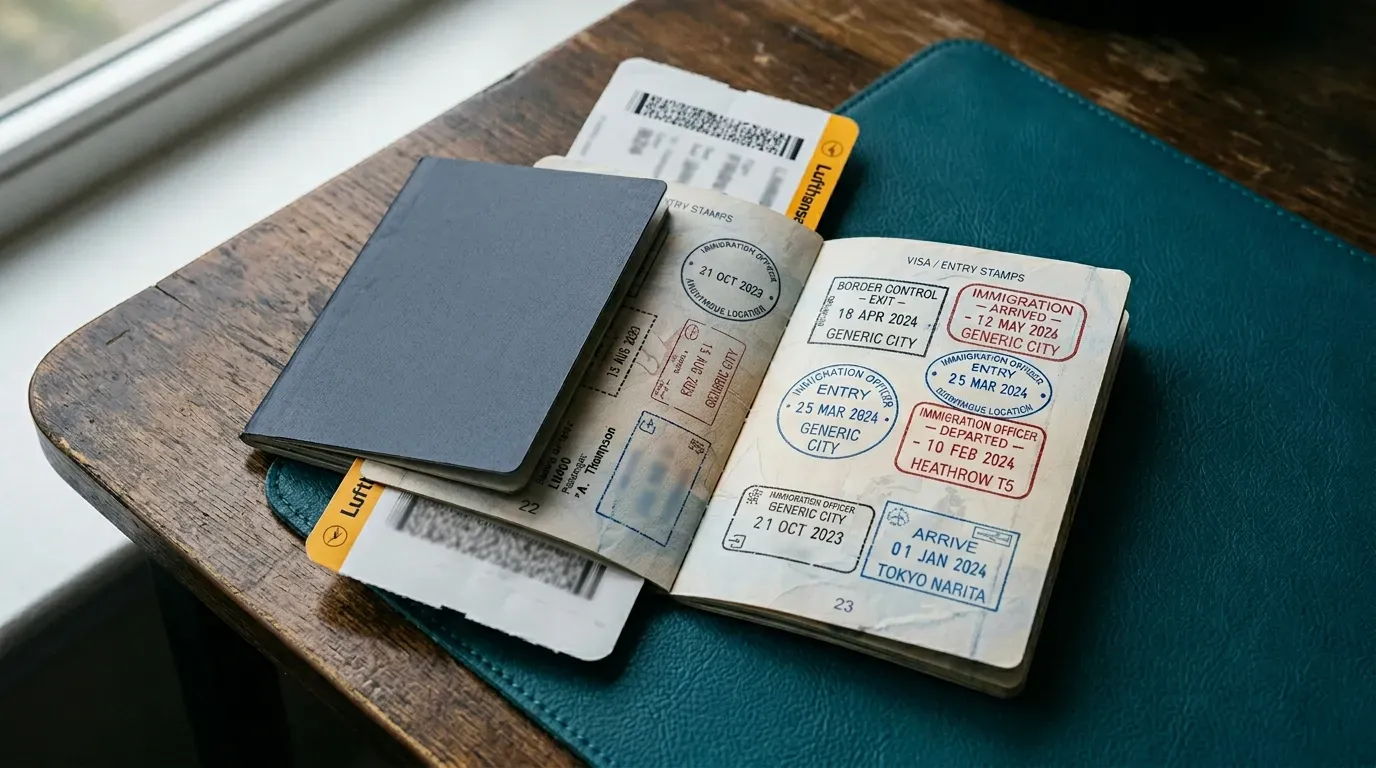
You may need to apply for a residency certificate (e.g. for a tax authority in another country) or for a national tax certificate. When you do, the Cypriot authorities will usually ask you to prove that you really stayed on the island.
You can show this by presenting flight tickets, electricity bills, shopping receipts, credit card statements and similar records.
If you cannot show that you stayed at least 60 days a year in Cyprus, your request is likely to be denied.
In our experience, people who live on the island with Cyprus Non-Dom Status have no trouble reaching the minimum number of days. Quite the opposite.
The rule is flexible. You do not have to spend these days on the island all at once. You can spread them across the year. This works well even for people who travel a lot.
Time Spent Outside Cyprus
After you relocated to Cyprus, you can travel and stay abroad like any other visitor or tourist. However, in most countries you become a tax resident once you set up a regular home or a domicile and stay more than 183 days in that country.
Domicile vs. regular home (Domicile vs. Non-Domiciled)
A domicile is your permanent legal home, while a regular home (residence) is where you currently live. You can have multiple residences at once, but you can only have one legal domicile at any given time. Your domicile determines your primary legal jurisdiction, tax obligations, and estate laws.
Typical thresholds in Europe
In most European countries, the rules work in a similar way. As a rough guide, if you spend more than about six months a year in one country, you will usually become a tax resident in that country. If you are only there to relax, recover, or for short visits, the limit is often closer to twelve months. The exact numbers are different in each country.
Whatever the rules, the idea is the same: when you are abroad, act like a visitor or tourist, not like a local resident.

Keeping a Residence in Your Home Country
A frequently asked question is whether it is possible to hold on to a property in one's home country after relocating to Cyprus. The short answer is no. There are several reasons for this.
Why a residence in your home country is a problem
Should you own a property in your country of origin, you are likely to be subject to full taxation in that country. A second home in one's country of origin can also present similar challenges.
There is an additional reason for this. Cyprus Non-Dom Status is a tax regime that allows its holders to pay tax in Cyprus only, rather than in any country other than Cyprus. It is not permissible to hold the status if one wishes to keep a home that matters for tax purposes elsewhere.
If you would rather not move at all
Maybe you would prefer not to move and would rather stay in your home country. In that case, setting up a Cyprus limited company is still an option. We are happy to walk you through the rules and requirements.
We are happy to assist!
for a free consultation
with one of our experts
Readers were also interested in
Our Terms & Conditions and our Terms of Use.