












Moving to Cyprus with Pets
You can only bring pets into the Republic of Cyprus at these places:
- The international airports of Larnaca and Paphos
- The ports of Limassol, Larnaca and Paphos
You cannot bring pets in through any other point of entry.
Some species are covered by CITES (the Convention on International Trade in Endangered Species of Wild Fauna and Flora). For these species, you may only use the airports of Larnaca and Paphos and the ports of Larnaca and Limassol.

Moving with Pets
The rules for moving pets for non-commercial reasons come from EU animal health law: Regulation (EC) No. 998/2003 and any related EU or national rules.


Dogs, Cats and Ferrets
1. General Requirements
Each animal must be easy to identify. An animal usually counts as identifiable if it has one of these:
- a tattoo you can read clearly, or
- a microchip.
The microchip should meet ISO Standard 11784 or Annex A of ISO Standard 11785. If it does not, you (or the person looking after the animal) must make sure the chip can be read at the inspection. Tattoos were only accepted until 3 July 2011. Since that date, only the microchip is accepted as proof of identity.
You should normally have the microchip put in before the rabies vaccination, and you should be able to show this.
2. Rabies Vaccination
The animal must be at least three months old to be vaccinated. The first vaccination certificate must be issued at least 21 days before entry. Booster vaccinations are valid from the day they are given, as long as they fall within the time set by the vaccine maker. If the first vaccination was never certified, a booster counts as a first vaccination.
3. Age
Because of the rules above, every pet brought into the Republic of Cyprus must be at least 111 days old. You cannot bring in younger animals.
4. Banned Breeds
These dog breeds cannot be brought in:
- American Pitbull Terrier or Pit Bull Terrier
- Japanese Tosa or Tosa Inu
- Dogo Argentino or Argentinian Mastiff
- Fila Brasileiro or Brazilian Mastiff
5. Documents You Need
You must show these documents for each animal:
- A vaccination passport that shows a valid rabies vaccination
- Documents that show the animal is coming into Cyprus from another EU Member State
6. Inspection on Arrival
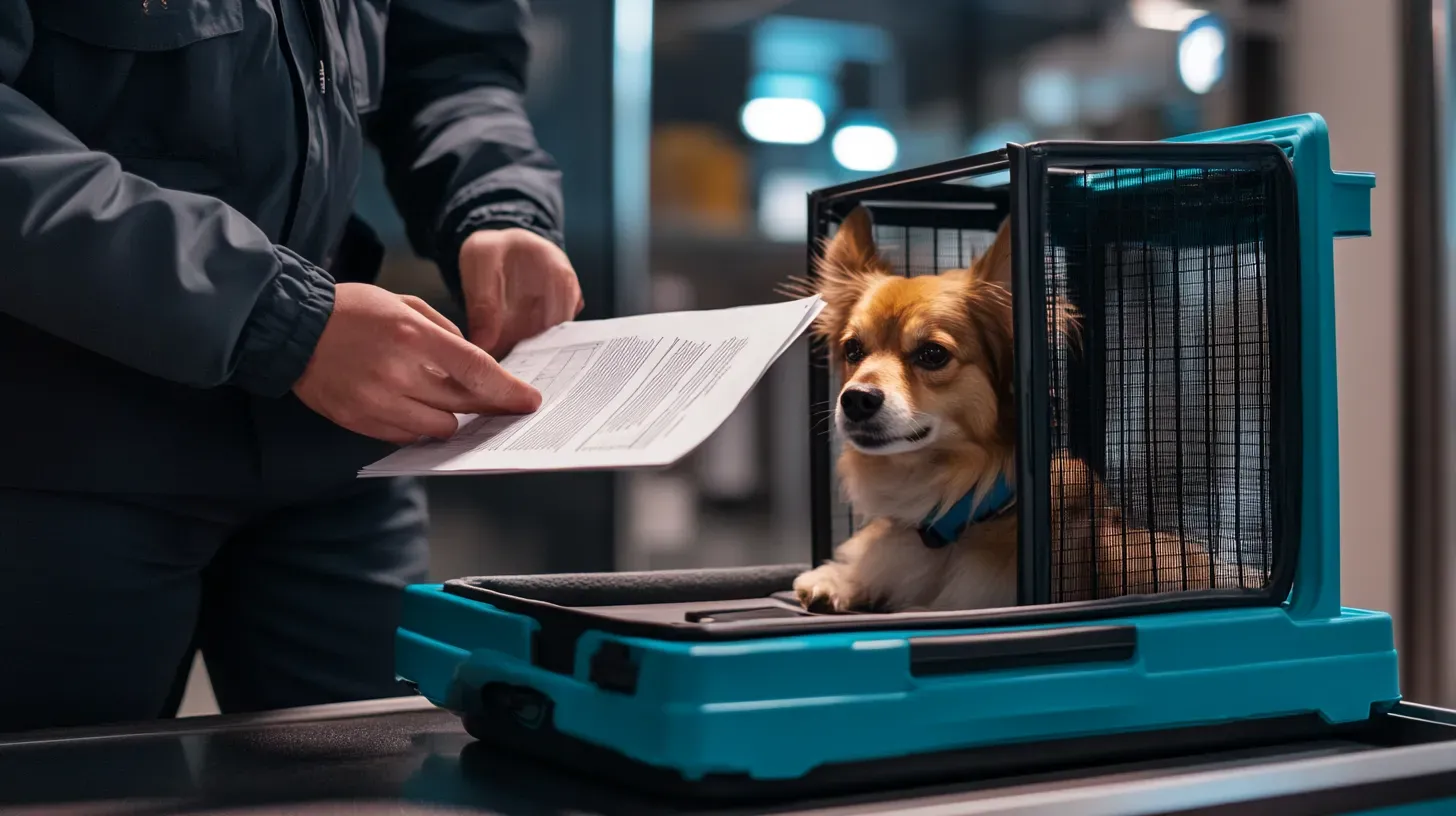
When you arrive, a veterinary officer or the customs officer on duty will check every animal and its documents.
7. What Happens If an Animal Does Not Meet the Rules
If an animal does not meet the rules, it may be:
- sent back to its country of origin
- placed in quarantine until it meets the health rules, for no more than six months
- put down, with no payment to the owner, if it cannot be sent back or kept apart.
The owner or responsible person must also pay for the inspection and for any quarantine fees, plus VAT.

Other Species
For animals other than dogs, cats and ferrets, you should get approval from the Veterinary Service before you enter Cyprus.
Further Information
European Commission, Directorate-General for Health and Consumer Protection: Pet travel information
Cyprus Veterinary Services: Official website
Contact
Cyprus Veterinary Services
Tel.: +357 22 805 152, +357 22 805 153, +357 22 805 253
Fax: +357 22 805 176
Email: Animal.Health@vs.moa.gov.cy
We are happy to assist!
for a free consultation
with one of our experts
Readers were also interested in
Our Terms & Conditions and our Terms of Use.