






The Drawbacks of a Remittance Basis Tax System and the Traditional Non-Dom
Under traditional Non-Dom systems, foreign income is often tax-free only if it stays outside the Non-Dom country. That means you must not bring it into that country or use it there. This rule is known as the remittance basis.
The income also usually must not come from local sources. If you bring foreign income into the country, or use it there, you may have to pay some or all of the tax. This depends on the local law.
In practice, these systems can be very limiting. They often give you the opposite of a simple and flexible tax setup.

A Simplified Example: Relocating to Malta
A business owner moves to Malta to use the country's Non-Dom regime. But Malta uses a remittance basis system, so several practical problems can come up.
Issue 1 Local Corporate Structures May Trigger Tax Consequences
Dividend income may become taxable in Malta. Whether it does usually depends on the structure, where the profits come from, and how the money is used. This is most likely if the income is brought into Malta or used there.
Issue 2 Everyday Use of Foreign Income Can Become Complicated
Using foreign income to pay for daily living in Malta can also cause practical and tax problems.
If you move foreign income into Malta, or use it there, you may have to pay some tax on it. This depends on your situation. It can also mean a lot of paperwork, because you usually have to show where the money came from and how you used it.
This raises an important question. How can a Non-Dom pay for daily life, investments or larger purchases in the country, without always having to check the remittance rules?
Is the Holding Company Really a Possible Solution?
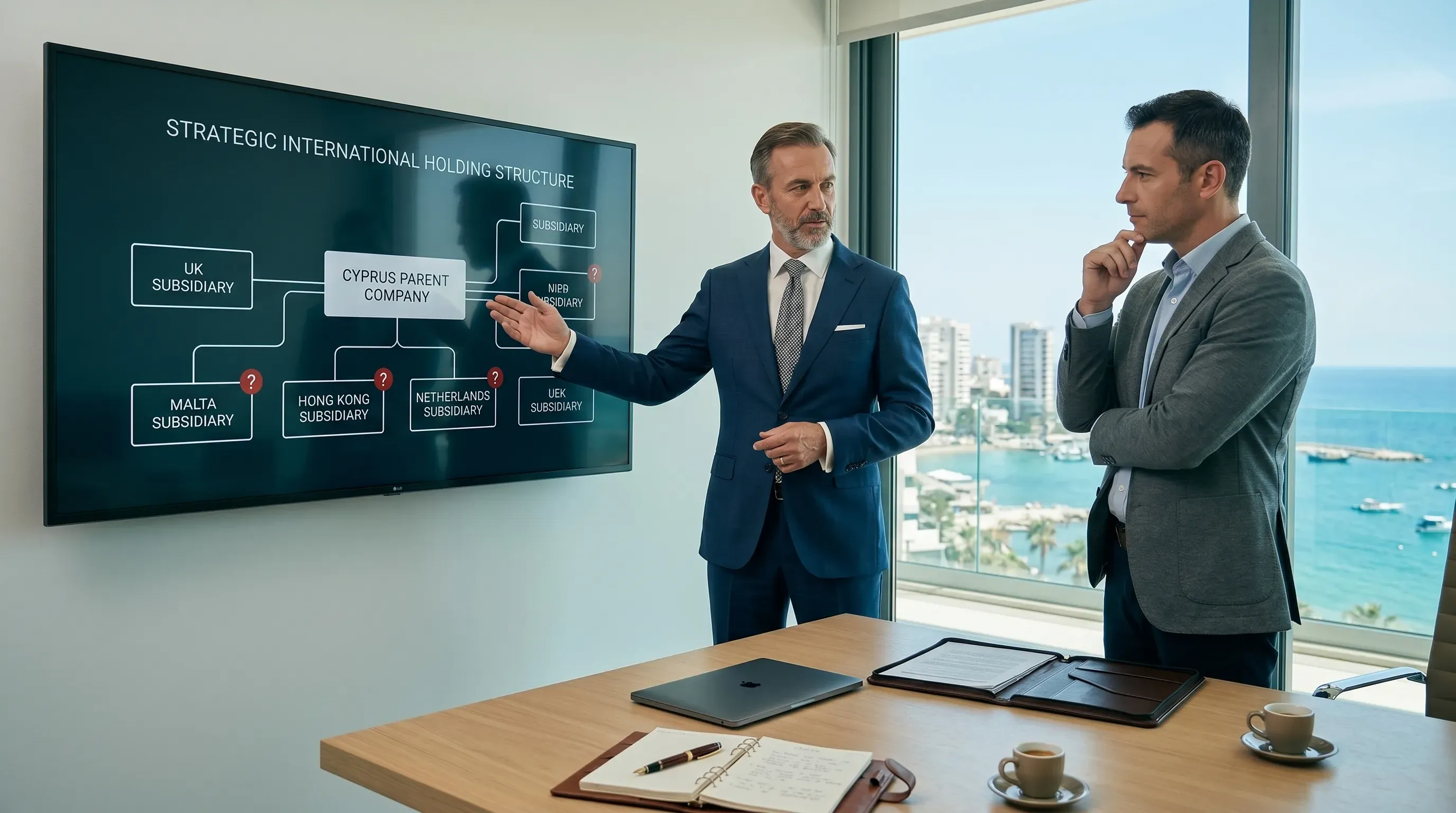
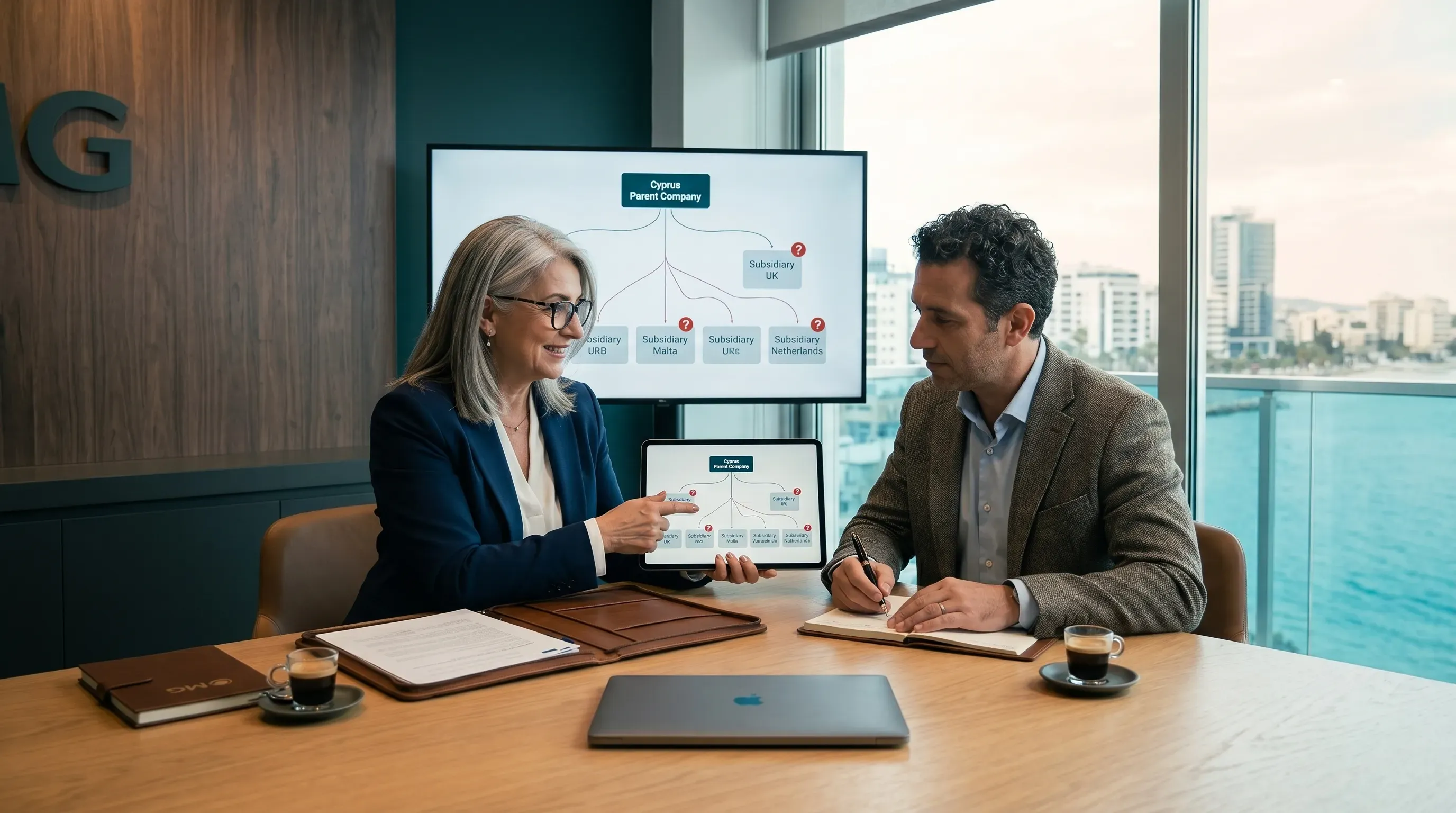
To reduce the downsides of traditional remittance basis systems, people often use holding structures. One common model is to set up an extra holding company inside the Non-Dom country.
A simple example works like this:
- An operating company is set up in Malta.
- A Maltese holding company is placed above it.
- The holding company owns the shares of the operating company.
- The holding company is owned by a person or company outside Malta.
These structures must be planned with care and run properly. International tax rules have become much stricter in recent years. Things like economic substance, place of effective management, Controlled Foreign Company (CFC) rules, beneficial ownership and international anti-abuse rules now matter a great deal.
A company that only exists on paper, with no real activity or local presence, can create serious tax and legal risks.
The Modern-Day Non-Dom System in Cyprus
The Cyprus Non-Dom regime is also based on British tax principles. But Cyprus has updated the system and made it far more practical for today's world.
Unlike traditional remittance basis systems, Cyprus usually does not care whether dividend income is earned locally or abroad. It also usually does not matter whether you move the money into Cyprus.
For people who are tax resident in Cyprus and qualify as Non-Doms, the current rules give you the following:
- Dividend income from both local and foreign sources is free from the Special Defence Contribution (SDC).
- This exemption currently applies for up to 17 years.
- Many kinds of interest income may also be exempt.
Cyprus does not run a traditional remittance basis system, the way some older Non-Dom countries do. So there is often no need for complex holding structures set up only to avoid remittance tax.
There is also far less paperwork, because you can usually move money into Cyprus and use it there without paying extra tax.
You should still check international tax rules, substance requirements and the tax treatment in your home country carefully, case by case.
Cyprus Scores Highly on Simplicity and Predictability
Today, the Cyprus Non-Dom regime is seen as one of the more practical and modern systems in Europe.
Besides the tax benefits, many international entrepreneurs and investors value:
- the simple structure
- EU membership
- the British-based legal system
- the international business environment
- the long-term stability of the regime
- good flight connections to and from Cyprus
- the climate and the healthy Mediterranean lifestyle
As with any international structure, the right solution always depends on your personal situation, your business, your income sources and the tax rules in your home country.
We are happy to assist!
for a free consultation
with one of our experts
Readers were also interested in
Our Terms & Conditions and our Terms of Use.